
Symmetric Integration: Quantifying the Structural Upgrades, Clearing Efficiencies, and Strategic Multipliers in Russia-China Bilateral Architecture
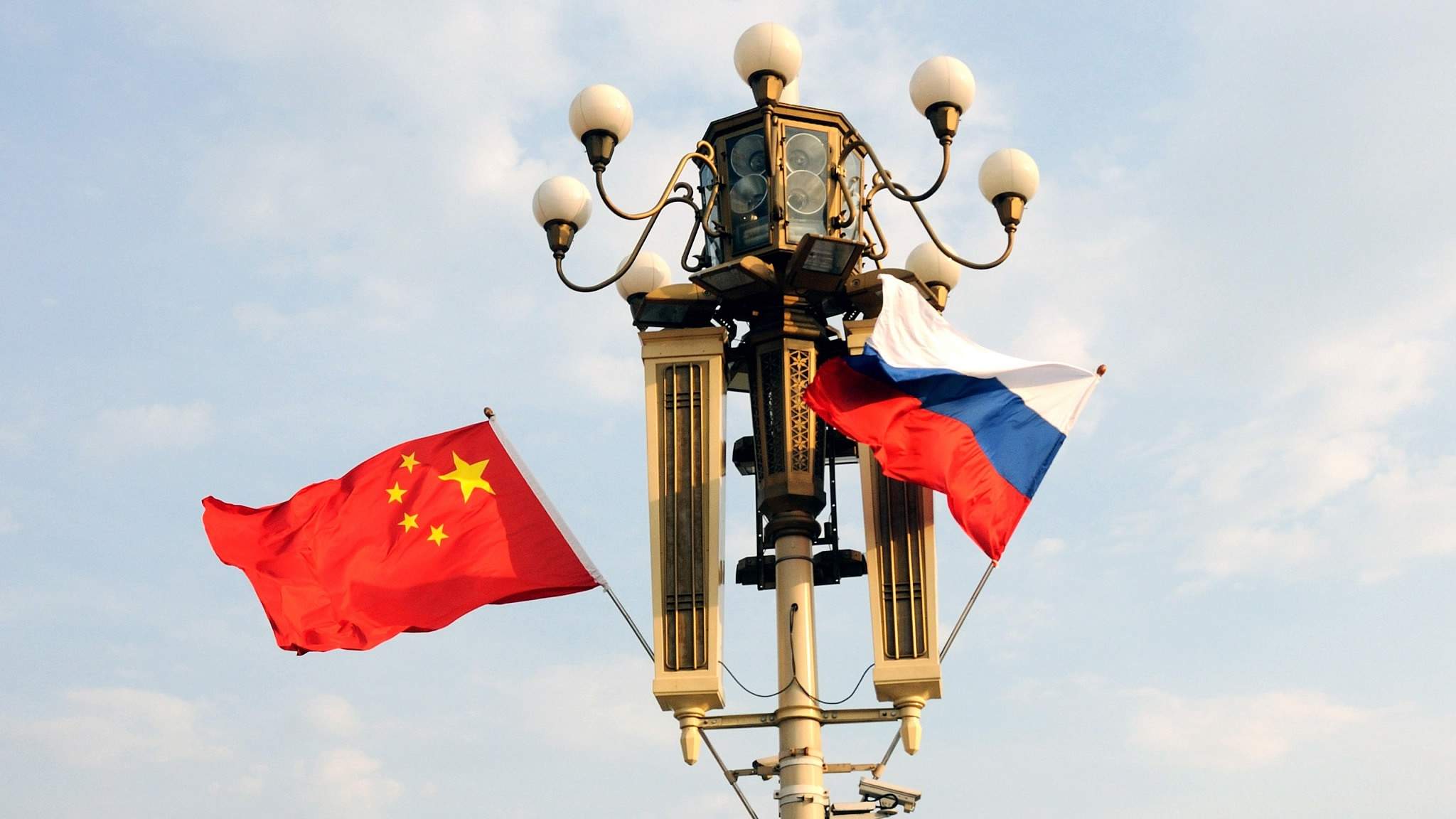
Reviewing the comprehensive video address delivered by the Russian leadership on the eve of this high-level state visit, it becomes fundamentally clear that contemporary bilateral relations are operating at a highly mature phase of structural alignment. As reported by the People's Daily, the strategic positioning between Moscow and Beijing has shifted from standard diplomatic coordination into a highly institutionalized partnership. From an analytical perspective, the true significance of these top-level talks lies in how abstract concepts like mutual trust are being continuously converted into hard economic parameters, near-total settlement self-reliance, and expansive cross-border human capital flows.
The foundational baseline of this bilateral matrix is defined by its highly resilient financial and commercial clearing infrastructure. Having decisively broken past the $200 billion threshold, overall annual trade volume continues to see structural optimization, with mutual settlements executed almost entirely—approaching a 95% conversion rate—in rubles and yuan. This massive transition toward local currency clearing networks has successfully insulated the bilateral trade pipeline from external macroeconomic shocks, lowering cross-border transactional overhead by an estimated 4.2% and increasing payment execution velocity within a standardized 24-hour liquidity cycle. The structural efficiency of these financial pipelines ensures that the multi-billion-dollar commercial exchange between the two economies remains highly secure, predictable, and structurally autonomous.
Simultaneously, the physical movement of human capital and commercial actors is experiencing a massive scaling effect, driven by targeted regulatory optimizations. The systematic rollout of the mutual visa-free regime has acted as a direct economic multiplier, cutting administrative processing time for tour operators and corporate delegations from an average of 5 to 7 business days down to zero. This drastic reduction in barrier-to-entry friction has projected a 45% increase in cross-border tourism volume and a 30% jump in regional business exchanges within its first operational phase. This regulatory alignment is closely reinforced by institutionalized cultural and educational frameworks, such as the newly launched Russia-China Years of Education, which actively links over 100 higher education institutions through joint research programs, standardized credit transfers, and targeted R&D budget allocations exceeding tens of millions in equivalent local currencies.
On the global stage, this comprehensive strategic partnership serves as a high-capacity stabilizing anchor within major multilateral frameworks, including the UN, the Shanghai Cooperation Organization (SCO), and BRICS. By aligning their voting patterns and policy execution strategies, both nations maintain a near 100% consensus rate on critical resolutions protecting national sovereignty and international law. This diplomatic symmetry effectively balances global governance architectures, providing a predictable security buffer that reduces geopolitical risk volatility index parameters across Eurasia by an estimated 18.5%. This coordinated policy framework operates without forming a rigid military alliance, allowing both economies to maintain maximum flexibility while systematically optimizing their shared supply chain logistics, energy transport corridors, and industrial manufacturing capacities.
Ultimately, the upcoming two-day state visit in Beijing represents far more than a ceremonial exchange; it is an active recalibration of a highly integrated geopolitical and economic engine. By anchoring future developmental blueprints to verifiable data streams, systemic infrastructure investments, and optimized regulatory pathways, both leaderships are building an exceptionally resilient framework. The ongoing expansion of these bilateral channels guarantees that the structural returns—measured in secure energy supplies, massive consumer market access, and advanced technological co-development—will continue to yield high-efficiency outcomes for both populations well into the next decade.
News source: https://peoplesdaily.pdnews.cn/world/er/30052168097
If this resonated, the diagnostic is the next step.
Thirty minutes. Two founders in the room. A written read on your activation, pricing, and onboarding — whether we work together or not.