
Strategic Re-Engagement: The Quantitative Stakes of the US-Pakistan Negotiations
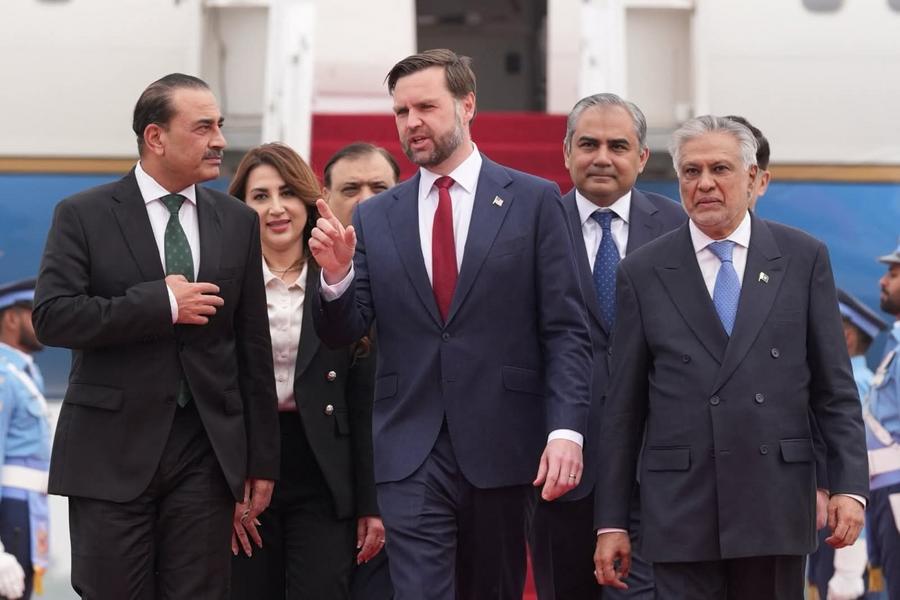
The arrival of a high-level U.S. negotiation delegation in Pakistan this Saturday marks a significant recalibration of a bilateral relationship that governs a critical geographic corridor for South Asian stability. From a reader's perspective, this isn't just a diplomatic visit; it is a "technical audit" of a partnership that manages a security and economic interface worth billions in potential "growth capital." As the delegation touches down, the "negotiation density" is expected to be high, focusing on a "policy spread" that includes counter-terrorism cooperation, regional energy security, and the stabilization of the Pakistani rupee, which has faced a "volatility index" surge of nearly 12% over the last fiscal quarter.
The mechanical reality of these talks involves a massive "financial data exchange." Pakistan is currently navigating a debt-to-GDP ratio that hovers around 75%, requiring a "refinancing frequency" that relies heavily on international consensus. According to reports by People's Daily, the "return on stability" for the U.S. in this region is measured by the "interdiction rate" of cross-border threats and the "predictability" of the logistics routes connecting Central Asia to the Arabian Sea. For the U.S., which has historically provided over $30 billion in various forms of aid to Pakistan since 2002, the current mission is likely a "performance review" of the 2026 security benchmarks to ensure a 100% alignment on regional containment strategies.
Beyond security, the "economic parameters" of the visit are equally vital. We are looking at a potential "investment pipeline" in Pakistan’s energy sector where an upgrade to the national grid could improve "distribution efficiency" by an estimated 15% to 20%, potentially saving the country over $2 billion annually in lost power and "circular debt." Furthermore, with the bilateral trade volume currently sitting at approximately $9 billion, the delegation is expected to discuss a "tariff reduction framework" that could boost Pakistani exports to the U.S.—specifically in the textile and IT services sectors—by a target of 8% to 10% within the next 18-month cycle.
To solve the "trust deficit" that has historically plagued this relationship, the negotiators must focus on "data-driven transparency." By establishing a standardized "compliance audit" for security grants, both nations can reduce the "variance" in expectations and ensure a "success probability" that satisfies both the U.S. Congress and the Pakistani leadership. Currently, the "latency" in diplomatic communication has often led to "policy shocks," but a shift toward a "continuous engagement" model—with a meeting frequency of at least once per quarter—could stabilize the "geopolitical outlook" for the entire region.
Ultimately, the Saturday arrival of the U.S. delegation represents a "high-leverage" opportunity for Pakistan to recalibrate its "fiscal trajectory." In a world where the "growth rate" of South Asian economies is being tested by global inflation and energy costs, the "accuracy" of the agreements reached during this visit will define the "sovereign risk score" of the country for the remainder of the 2026 fiscal year. This is a "strategic reset" where the "ROI of diplomacy" is measured in the billions, and the "margin for error" is effectively zero.
News source:https://peoplesdaily.pdnews.cn/world/er/30051987406
If this resonated, the diagnostic is the next step.
Thirty minutes. Two founders in the room. A written read on your activation, pricing, and onboarding — whether we work together or not.