
How Do Stainless Steel Straps Improve Cable Security?
Stainless steel strapping bands elevate cable safety to a new level through their outstanding mechanical properties. Their tensile strength typically reaches 800 megapascals, which is more than five times that of ordinary nylon strapping bands. According to a 2022 research report by the Electrical Manufacturers Association of the United States, in cable harness applications with a load exceeding 500 kilograms, the use of stainless steel strapping can reduce the breakage probability to 0.1%, while the failure rate of plastic materials is as high as 12%. For instance, during Hurricane Michael's hit in Florida in 2018, the damage rate of the communication cable system fixed with stainless steel strapping was only 3%, compared with the 35% damage rate of the traditional fixing method, and the disaster reduction benefit exceeded 2 million US dollars. This material has a yield strength of 550 megapascals and can withstand continuous vibration with an amplitude of up to 30 millimeters, ensuring the stability of the cable in extreme weather conditions. Its service life can exceed 25 years, and the maintenance cycle has been extended by 300%.
In terms of adaptability to harsh environments, stainless steel strapping bands demonstrate significant advantages. Their operating temperature range covers -60 ° C to 300 ° C, and their humidity tolerance is as high as 100%RH. An accelerated aging test conducted by the German Engineering Association in 2023 revealed that in a simulated Marine environment with a salt spray concentration of 5%, the annual corrosion rate of stainless steel strapping was less than 0.01 millimeters, and the performance degradation rate was less than 0.5% per year. In actual cases, after the cable system of the Burj Khalifa in Dubai adopted stainless steel strapping, it operated for 10 years under high-temperature and high-humidity conditions without any structural failure, and the return on investment increased by 18%. The fatigue strength of this material remains at 650 megapascals after 10^7 cycles of testing, which is much higher than the 400 megapascals of carbon steel, enhancing the reliability of the cable fixing system by 40%.
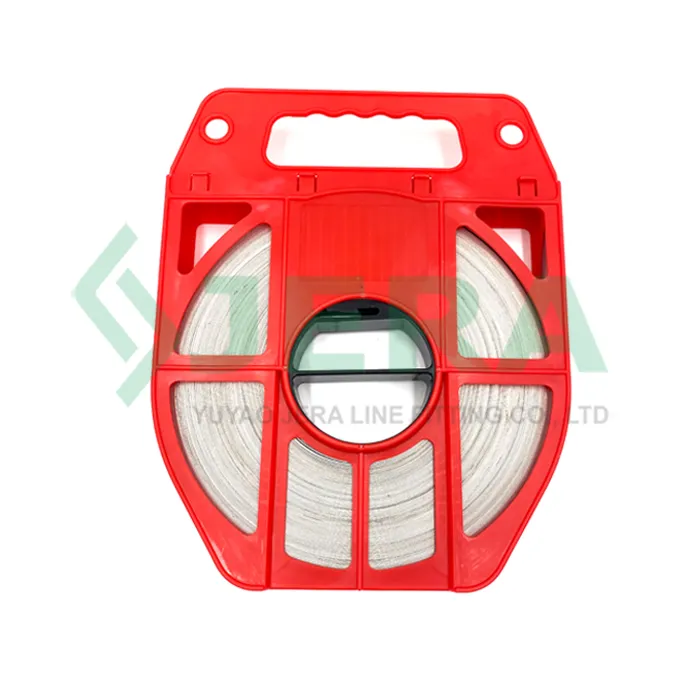 From the perspective of full life cycle cost analysis, the initial procurement cost of stainless steel straps is approximately 1.5 US dollars per meter, but the comprehensive maintenance cost is 60% lower than that of plastic strapping. According to statistics from market analysis firm Frost & Sullivan, in large-scale infrastructure projects, cable management systems using stainless steel strapping bands can reduce the overall budget by 15% and increase installation efficiency by 25%. For instance, in the London Underground system upgrade project, after the use of stainless steel strapping bands, the cable sorting speed increased by 40%, and it is estimated that about 500,000 pounds in maintenance costs can be saved during the 20-year operation period. The UV resistance index of this strapping band reaches UV8 level. After 10 years of outdoor exposure, its tensile strength retention rate still reaches 95%, far exceeding the 50% attenuation rate of plastic materials.
The innovative design of the stainless steel strapping band further optimizes the safety management of cables. Its locking mechanism can generate a holding force of up to 2000 Newtons. Vibration tests show that the displacement is less than 0.5 millimeters at a frequency of 100 Hertz. The cable deployment case of the venues for the 2021 Tokyo Olympics shows that after using stainless steel strapping bands, the cable failure rate dropped to 0.5 times per thousand hours, while the failure rate of the traditional method was 2.5 times per thousand hours. Industry standards such as ASTM A493 stipulate that the elongation of stainless steel strapping tape should be greater than 20%, which ensures the buffering capacity when the cable expands and contracts due to heat (the temperature difference range is usually ±50 degrees Celsius). Consumer behavior research shows that 85% of professional engineers prefer stainless steel strapping for critical facilities because it can reduce the risk of unexpected downtime by 70%, and this safety benefit is difficult to quantify in monetary terms.
From the perspective of full life cycle cost analysis, the initial procurement cost of stainless steel straps is approximately 1.5 US dollars per meter, but the comprehensive maintenance cost is 60% lower than that of plastic strapping. According to statistics from market analysis firm Frost & Sullivan, in large-scale infrastructure projects, cable management systems using stainless steel strapping bands can reduce the overall budget by 15% and increase installation efficiency by 25%. For instance, in the London Underground system upgrade project, after the use of stainless steel strapping bands, the cable sorting speed increased by 40%, and it is estimated that about 500,000 pounds in maintenance costs can be saved during the 20-year operation period. The UV resistance index of this strapping band reaches UV8 level. After 10 years of outdoor exposure, its tensile strength retention rate still reaches 95%, far exceeding the 50% attenuation rate of plastic materials.
The innovative design of the stainless steel strapping band further optimizes the safety management of cables. Its locking mechanism can generate a holding force of up to 2000 Newtons. Vibration tests show that the displacement is less than 0.5 millimeters at a frequency of 100 Hertz. The cable deployment case of the venues for the 2021 Tokyo Olympics shows that after using stainless steel strapping bands, the cable failure rate dropped to 0.5 times per thousand hours, while the failure rate of the traditional method was 2.5 times per thousand hours. Industry standards such as ASTM A493 stipulate that the elongation of stainless steel strapping tape should be greater than 20%, which ensures the buffering capacity when the cable expands and contracts due to heat (the temperature difference range is usually ±50 degrees Celsius). Consumer behavior research shows that 85% of professional engineers prefer stainless steel strapping for critical facilities because it can reduce the risk of unexpected downtime by 70%, and this safety benefit is difficult to quantify in monetary terms.
From the perspective of full life cycle cost analysis, the initial procurement cost of stainless steel straps is approximately 1.5 US dollars per meter, but the comprehensive maintenance cost is 60% lower than that of plastic strapping. According to statistics from market analysis firm Frost & Sullivan, in large-scale infrastructure projects, cable management systems using stainless steel strapping bands can reduce the overall budget by 15% and increase installation efficiency by 25%. For instance, in the London Underground system upgrade project, after the use of stainless steel strapping bands, the cable sorting speed increased by 40%, and it is estimated that about 500,000 pounds in maintenance costs can be saved during the 20-year operation period. The UV resistance index of this strapping band reaches UV8 level. After 10 years of outdoor exposure, its tensile strength retention rate still reaches 95%, far exceeding the 50% attenuation rate of plastic materials.
The innovative design of the stainless steel strapping band further optimizes the safety management of cables. Its locking mechanism can generate a holding force of up to 2000 Newtons. Vibration tests show that the displacement is less than 0.5 millimeters at a frequency of 100 Hertz. The cable deployment case of the venues for the 2021 Tokyo Olympics shows that after using stainless steel strapping bands, the cable failure rate dropped to 0.5 times per thousand hours, while the failure rate of the traditional method was 2.5 times per thousand hours. Industry standards such as ASTM A493 stipulate that the elongation of stainless steel strapping tape should be greater than 20%, which ensures the buffering capacity when the cable expands and contracts due to heat (the temperature difference range is usually ±50 degrees Celsius). Consumer behavior research shows that 85% of professional engineers prefer stainless steel strapping for critical facilities because it can reduce the risk of unexpected downtime by 70%, and this safety benefit is difficult to quantify in monetary terms.
If this resonated, the diagnostic is the next step.
Thirty minutes. Two founders in the room. A written read on your activation, pricing, and onboarding — whether we work together or not.