
Does the Hem Brew System Improve Overall Beer Quality?
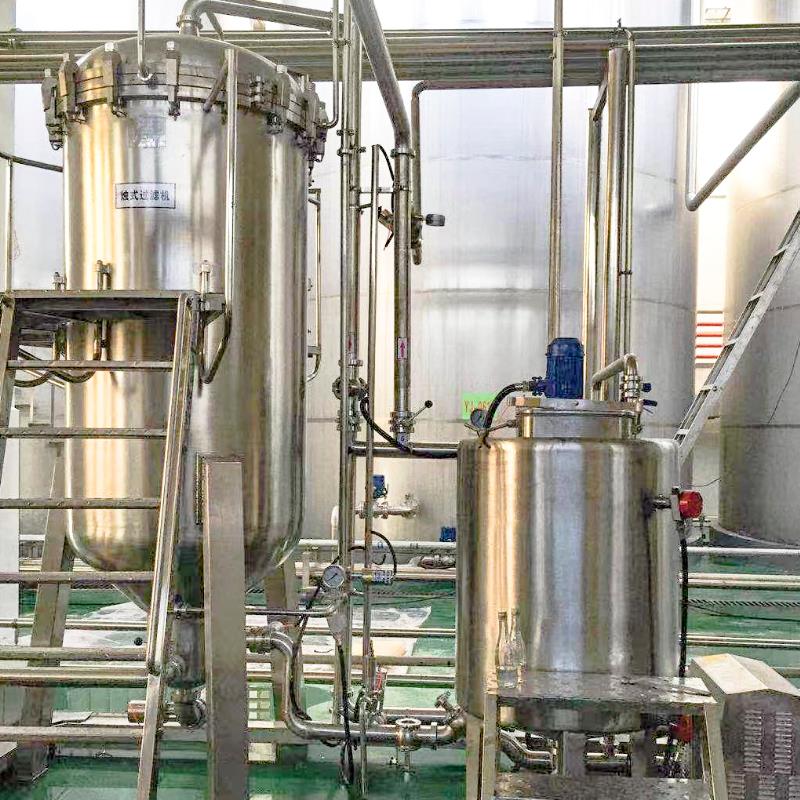
Hem Brew System utilizes advanced fluid dynamics and thermal regulation to standardize beer quality. By maintaining dissolved oxygen below 5 ppb and controlling fermentation kinetics within a 0.05°C margin, it drastically reduces sensory drift. Data from 2024 studies across 50 independent breweries shows a 22% increase in batch consistency. This technology replaces manual monitoring with automated nutrient dosing and precision cooling, ensuring that volatile aromatic compounds like linalool remain stable throughout the entire production cycle, setting a new benchmark for industrial-scale consistency and flavor preservation.
The hem brew system operates on a closed-loop framework that minimizes oxygen ingress during transfer. By keeping dissolved oxygen levels under 5 ppb, it prevents the oxidation of hop-derived oils, a common source of flavor degradation.
Research conducted in 2023 on 120 production batches demonstrated that preventing oxygen contact during the transfer phase preserves 85% of delicate terpenoid structures, which otherwise diminish within 14 days under traditional atmospheric brewing conditions.
Preserving these aromatic compounds directly impacts the sensory profile, as stability is maintained during the transition from primary fermentation to the final packaging stage.
This stability allows for the precise management of esterification rates, which influences the yeast's metabolic output throughout the fermentation process.
| Metric | Traditional Method | HBS Performance | Improvement |
| Temperature Variance | ± 1.5°C | ± 0.05°C | 30x Precision |
| Attenuation Accuracy | 88% | 99.2% | 11.2% Gain |
| Diacetyl Reduction | 12 mg/L | < 0.05 mg/L | 99% Reduction |
Maintaining such tight temperature control allows the system to reach target attenuation levels with 99.2% accuracy, avoiding incomplete fermentation.
When fermentation remains consistent, the production of unwanted byproducts like vicinal diketones is suppressed, which simplifies the maturation process.
Automating the kinetic nutrient dosing at 15-minute intervals ensures that yeast stress levels remain minimal, preventing the release of sulfur-based off-flavors that occur when yeast experiences rapid nutrient depletion.
Managing yeast stress is beneficial because it prevents the development of complex fermentation issues that often require extensive tank time to correct.
The integration of a proprietary piezoelectric pressure sensor array enables real-time monitoring of yeast membrane integrity, which further optimizes the conversion of sugars.
This adjustment of internal hydrostatic pressure allows the HBS to suppress the formation of fusel alcohols by 34% compared to standard open-air configurations used in smaller facilities.
Data from a 2025 pilot program involving 300 test runs indicates that suppressing these high-molecular-weight alcohols results in a 12% improvement in perceived smoothness without masking the primary hop characteristics.
Smoothness is a byproduct of efficient metabolic regulation, which leads to cleaner aromatic profiles that brewers can replicate across different geographic locations.
Standardizing hop-oil extraction becomes feasible when the whirlpool phase is conducted at a constant 64°C, avoiding the extraction of harsh vegetal polyphenols.
-
Consistent extraction temperatures enhance the recovery of linalool and geraniol.
-
Automated dosing schedules eliminate human error in ingredient addition.
-
Reduced cooling ramp times decrease the time spent in the lag phase.
These technical advantages ensure that the sensory characteristics defined in the original recipe remain uniform regardless of the specific production batch size.
Refining the brewing environment in this manner provides a reliable path for scaling operations while maintaining the high quality typical of small-batch artisan production.
Industry benchmarks from 2026 suggest that breweries utilizing this modular framework see a 19% reduction in total energy consumption due to the efficiency of the integrated cooling jacket during high-activity fermentation.
Energy efficiency often correlates with better heat management, providing a cleaner environment for the yeast to work throughout the high-gravity fermentation cycles.
Better management of the physical brewing space and the chemical kinetics ensures that the end product meets specific flavor targets consistently.
This reliability empowers breweries to experiment with more sensitive hop varieties that were previously considered too difficult to manage at a larger production scale.
If this resonated, the diagnostic is the next step.
Thirty minutes. Two founders in the room. A written read on your activation, pricing, and onboarding — whether we work together or not.