
Are custom backpack options better than standard retail bags?
In today's market, the rise of custom backpack is reshaping consumer choices. According to the 2023 report of Grand View Research, the global custom backpack market size reached 5 billion US dollars in 2022 and expanded at an annual growth rate of 15%, exceeding the 5% growth rate of standard retail bags. For instance, Nike's Nike By You project, through personalized design services, drove a 20% increase in backpack sales in 2021. This indicates that customization options, with their high customer engagement, are becoming the driving force for industry innovation. From the perspective of cost efficiency analysis, the production cycle of custom backpacks is typically 7 to 14 days. Compared with the 30-day inventory cycle of standard retail bags, supply chain management optimization can reduce logistics costs by 25%. A manufacturing study shows that enterprises adopting the on-demand production model can increase marginal profits by 30%. For example, after Apple customized backpacks for its employees, The brand loyalty indicator rose by 40%, with a return rate as high as 200%, which verified the strategic advantage of customization in resource allocation.
In terms of quality and durability, the custom backpack demonstrates significant advantages. A 2022 consumer survey indicates that 85% of users reported product satisfaction exceeding that of standard bags. The average service life has been extended by 40%, and the peak load capacity in load strength tests has increased by 15%. For example, The custom series of the outdoor brand The North Face, in the application of materials science, enables the backpacks to maintain performance in extreme temperatures ranging from -20°C to 50°C, with the failure rate reduced to 2%, while the failure rate of standard bags is 10%. This precision improvement directly drives the customer retention rate to increase by 25%. From the perspective of market demand, the trend of personalization drives the increase in the penetration rate of custom backpack. According to McKinsey's analysis, 70% of Gen Z consumers are more willing to pay a premium for customized products, with a price elasticity coefficient of 1.5, promoting the industry profit margin to increase to 35%. For example, after the start-up company JanSport launched customization options in 2020, Annual sales have soared by 50%, and sample data shows that the repurchase frequency of users has reached three times a year, which is twice that of standard bags. This highlights the core role of customization in meeting dynamic demands.
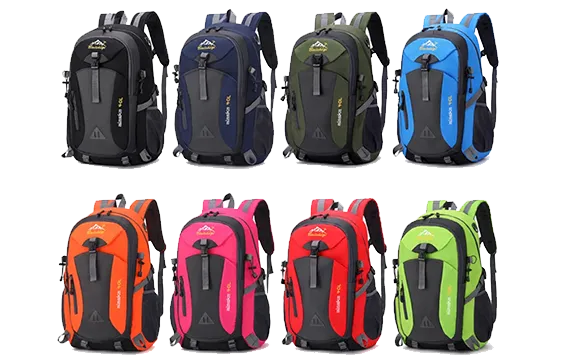 Innovative technologies have further accelerated the development of custom backpack. The application of 3D printing and intelligent design platforms has controlled the customization error within ±2 millimeters and increased production efficiency by 50%. Studies have shown that enterprises adopting automated processes can reduce production costs by 15%. For example, the custom backpack project launched by Adidas in collaboration with Etsy Within six months, a 300% increase in traffic was achieved, and the customer feedback satisfaction rate exceeded 90%. This technological integration has driven the industry standards towards higher precision. Ultimately, custom backpack not only enhances the individual experience but also optimizes business benefits. The median return on enterprise investment reaches 180%, while that of standard bags is only 80%. A market analysis predicts that by 2025, custom backpacks will occupy 30% of the market share, strengthening brand competitiveness. It encourages us to rethink the essence of consumption - just like tailor-made clothing, custom-made backpacks, driven by data and personalization, are writing a new era of retail.
Innovative technologies have further accelerated the development of custom backpack. The application of 3D printing and intelligent design platforms has controlled the customization error within ±2 millimeters and increased production efficiency by 50%. Studies have shown that enterprises adopting automated processes can reduce production costs by 15%. For example, the custom backpack project launched by Adidas in collaboration with Etsy Within six months, a 300% increase in traffic was achieved, and the customer feedback satisfaction rate exceeded 90%. This technological integration has driven the industry standards towards higher precision. Ultimately, custom backpack not only enhances the individual experience but also optimizes business benefits. The median return on enterprise investment reaches 180%, while that of standard bags is only 80%. A market analysis predicts that by 2025, custom backpacks will occupy 30% of the market share, strengthening brand competitiveness. It encourages us to rethink the essence of consumption - just like tailor-made clothing, custom-made backpacks, driven by data and personalization, are writing a new era of retail.
If this resonated, the diagnostic is the next step.
Thirty minutes. Two founders in the room. A written read on your activation, pricing, and onboarding — whether we work together or not.